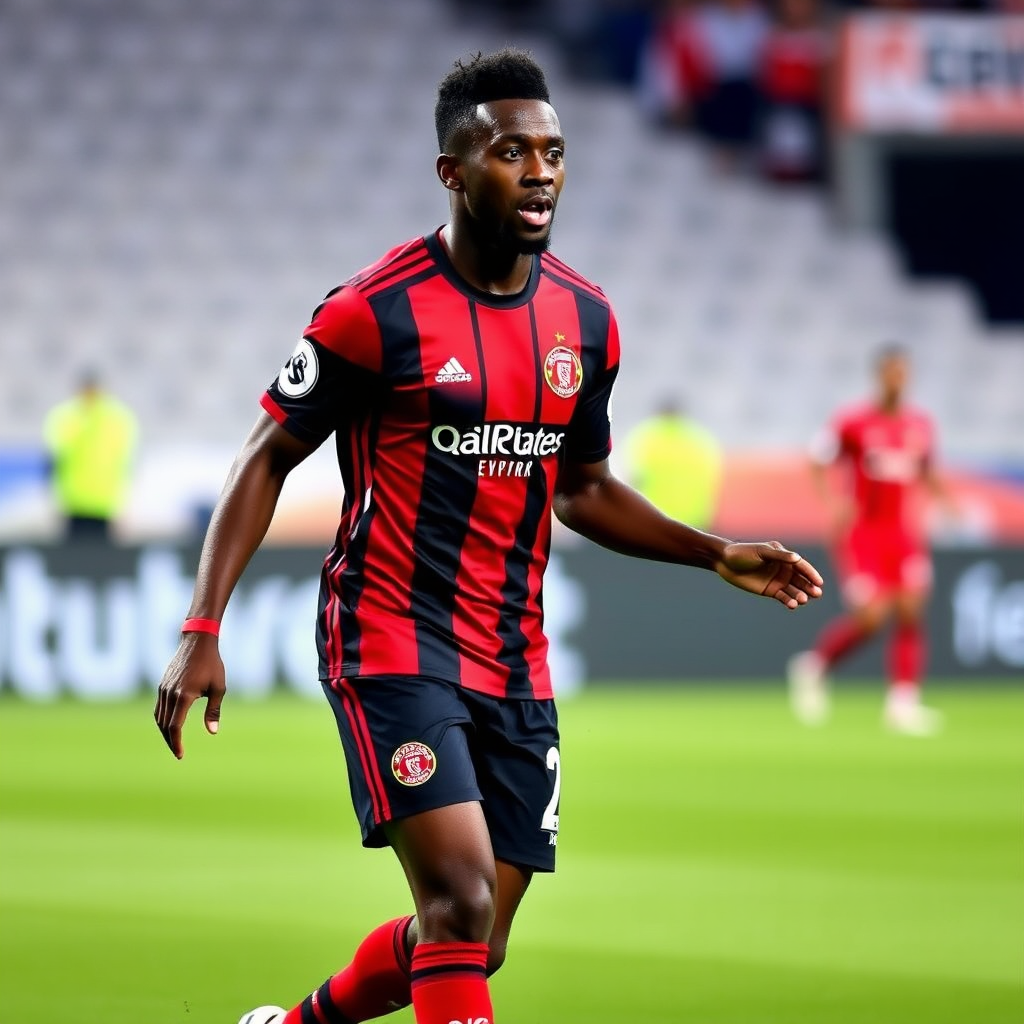

Didier Deschamps’ Pragmatic Football: A Review of What the Claims Actually Prove
Late evening. A fan opens a search result that promises to decode Didier Deschamps’ tournament formula. The page calls him a “master of the ugly win” and a “pragmatic genius.” It praises “results over romance.” Then it stops supplying anything concrete. No match reference goes beyond a bare scoreline. No formation, no substitution timeline, no mention of the players who carry out the plan. Just adjectives stacked like defensive lines.
That is the moment a UX reviewer stops reading and starts auditing. The content on 32wins.org asks the reader to accept a conclusion, not to examine a process. The real question is not whether Deschamps is pragmatic — most tournament observers would agree he is. The question is whether the page proves that position or disguises advertising as tactical analysis.
Five findings from reviewing the Deschamps content
- “Pragmatic approach” is used as a badge of approval, but the article never defines pragmatism: low block, counter-attack, tempo management, or something else?
- France’s tournament record is presented selectively. The 2018 World Cup title receives the spotlight; the 2022 final defeat and the Euro 2021 round-of-16 exit are secondary.
- Results are attributed almost entirely to Deschamps. Griezmann, Kanté, Mbappé and Giroud appear as decorative names, not as actors with decisions of their own.
- The page funnels readers toward other site verticals more forcefully than it delivers tactical evidence. The reader is treated as a future customer first.
- Football analysis is published without a meaningful risk disclaimer, even though the site sits in the betting and gaming space.
 Hình minh hoạ: 32WIN chính thức
Deconstructing the claims, one by one
“He wins without playing attacking football”
This claim is testable, and that is exactly the problem. Pull France’s tournament matches from 2016 to 2024 and you will see a team that routinely concedes possession, holds a mid-block, and attacks through vertical transitions. But ceding the ball is not the same as refusing to attack. France presses in defined zones, rotates heavily to preserve legs, and plays more openly once ahead. The “boring” label depends on which sample you choose. Verify the opponent, the stage, and the game state before accepting the summary.
“His substitutions win knockout games”
There are genuine examples. Randal Kolo Muani entered the 2022 World Cup final and scored an equalizer within minutes. That story supports the reputation. But the same record includes the 2021 European Championship, where France surrendered a two-goal lead against Switzerland after changes destabilized the midfield. The praise is built from selected highlights, not the full run of data.
“The method always delivers”
The honest overview is strong: World Cup in 2018, Nations League in 2021, World Cup final in 2022, European Championship semi-final in 2024. Yet France lost that World Cup final on penalties and exited Euro 2024 in a tight-loss to Spain. Pragmatism shortens the gap between good and great; it does not guarantee trophies. A balanced review must present both sides of that ledger.

| Claim on the page | What a reader should verify | Sales-copy red flag |
|---|---|---|
| “Deschamps is the king of pragmatic tournaments” | Year-by-year tournament results, including failures | Only titles and finals are named |
| “His conservatism gets the best out of stars” | Player minutes, formation data, pressing numbers | Star names are used as decoration, not evidence |
| “Learn his secrets here” | Concrete match examples with timestamps | No match references at all |

Who this fits and who should skip it
This kind of review helps the reader who wants to separate reputation from evidence. If you are looking for a quick, digestible case for Deschamps’ legacy, the page will feel satisfying. If you want a deeper tactical breakdown, with functional phases and personnel decisions mapped to moments in a match, you will likely leave unsatisfied.
The same limitation runs across the site’s ecosystem. Football commentary sits next to betting pages and even cockfighting content such as đá gà cựa dao và cựa sắt. Every vertical pulls the visitor toward a transaction. That is a legitimate business model, but once you see it, the “expert” voice reads differently. If you are here for betting, set a bankroll limit and treat tactical articles as entertainment, not prediction. No article can guarantee how a tournament will unfold.
A practical checklist for the next claim
Before trusting any page about Deschamps — or any other coach labeled a “tournament genius” — run a quick audit. Start with the 32WIN chính thức source itself, then cross-check every concrete statement against a neutral statistics service.
- Count the match references. Fewer than three means the author is not analyzing anything.
- Look for a definition. If “pragmatic” just means “wins,” the text is hollow.
- Check the sample. Does the page discuss the 2021 European Championship exit and the 2022 penalty defeat?
- Note the disclaimers. On a betting-adjacent site, football articles should disclose that risk clearly.
- Check what the page ultimately asks you to do. Read, share, deposit, or bet?
- Cross-reference on FBref or Transfermarkt before repeating any tactical claim as fact.
Deschamps has earned a place among France’s greatest managers. A good review of that reputation should look like a scouting report, not a sales pitch. When an article gives you adjectives instead of evidence, that gap is the review.